Green-Tea-Store

Saturday, June 13, 2009

Can Green Tea Prevent Hiv Infection ?

Green tea is slightly different from your average cuppa. It is made from the leaves of the evergreen Camellia sinensis plant, and is touted by many people as a bit of a wonder-drink, preventing cancer and heart disease. It contains chemicals called catechins, especially one called epigallocatechin gallate, or EGCG. This chemical is thought to be responsible for the health benefits of green tea. Now researchers in Texas have found that EGCG can stop HIV, the virus that causes AIDS, from binding to cells in the immune system. This binding is the first step in HIV infection, so if it can be blocked, then HIV infection might be avoided. But the researchers stress that drinking green tea is not enough to avoid HIV infection- as the amounts of EGCG they used in their experiments were many times greater than the amount you get from a cup of tea. But they think that agents based on EGCG, or which work in a similar way, might form the basis of new anti-HIV drugs in the future.

30th Nov 2003

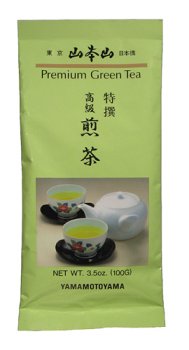
Yamamotoyama - Tokusen Kokyu Sencha (Premium Green Tea) 3.5 Oz.

Yamamotoyama - Tokusen Kokyu Sencha (Premium Green Tea) 3.5 Oz.
Price: $5.49
Yamamotoyama - Tokusen Kokyu Sencha (Premium Green Tea) 3.5 Oz.

Product Details

  • Amazon Sales Rank: #20048 in Grocery
  • Brand: Uwajimaya
  • Dimensions: .22 pounds

Features

  • Sencha is quite possibly Japan's most popular tea, delicate in flavor & filled with health benefits
  • Sencha refers to the first picking of the tea bush; there are several different grades of sencha
  • Sencha is high in vitamin C and antioxidants, believed to reduce the risk of cancer & heart disease
  • This sencha is higher grade; water temp should be 176F/80C and steep for 2 minutes
  • Net Wt. 3.5 Oz. (loose tea)

Good tea5
This tea has a really different taste from anything else, all other green teas will taste old compared to this. The pack it came in lasted me for about 3 months and I'm really sorry they don't have it avaliable anymore. I really recommend this.

Great tea- great price5
This tea tastes the same as the top-of-the-line tea I used to buy at Teavana and it costs 1/3 the price. I rarely drink anyhting else anymore because I cannot find a better tasting tea an any price.

excellent quality green tea5
I have consumed two bags of this green tea. It is an excellent quality tea, balanced in flavor and balanced in terms of the sense of well-being it imparts to the imbiber. It helps me to concentrate better and helps to even out my moods. It feels like a good detoxifier to take after eating a meal with a lot of saturated fats or meat, partly because of its anti-inflammatory effects. It has less caffeine than regular tea or coffee. Just enough caffeine to give a slight elevation of mood, but not enough to cause one to hyper-concentrate and feel mood swings. Of course, this tea consists of loose leaves and twigs, and not tea bags. This is an important concept. In a typical supermarket, the tea comes in bags and has too much caffeine and is overly processed, which reduces its nutritional value dramatically. In general, green tea bought from a popular brand in a supermarket does not contribute to the reputation for health that green tea has. This kind of green tea that is in the natural form is the only kind that does. I brew it by microwaving water to boiling, then letting the water cool for a couple minutes while stirring it with a spoon to agitate out any oxygen dissolved in the water. Then put a heaping teaspoon of the tea in it and let it sit for 3-4 minutes. Very hot but not boiling water is the key. You will likely find that consuming natural forms of green tea like this one, raw and unroasted, is far superior to drinking most popular brands of tea from the supermarket, or to drinking coffee.


Wednesday, June 10, 2009

What makes green tea so special?

The secret of green tea lies in the fact it is rich in catechin polyphenols, particularly epigallocatechin gallate (EGCG). EGCG is a powerful anti-oxidant: besides inhibiting the growth of cancer cells, it kills cancer cells without harming healthy tissue. It has also been effective in lowering LDL cholesterol levels, and inhibiting the abnormal formation of blood clots. The latter takes on added importance when you consider that thrombosis (the formation of abnormal blood clots) is the leading cause of heart attacks and stroke.

Links are being made between the effects of drinking green tea and the "French Paradox." For years, researchers were puzzled by the fact that, despite consuming a diet rich in fat, the French have a lower incidence of heart disease than Americans. The answer was found to lie in red wine, which contains resveratrol, a polyphenol that limits the negative effects of smoking and a fatty diet. In a 1997 study, researchers from the University of Kansas determined that EGCG is twice as powerful as resveratrol, which may explain why the rate of heart disease among Japanese men is quite low, even though approximately seventy-five percent are smokers.

Why don't other Chinese teas have similar health-giving properties? Green, oolong, and black teas all come from the leaves of the Camellia sinensis plant. What sets green tea apart is the way it is processed. Green tea leaves are steamed, which prevents the EGCG compound from being oxidized. By contrast, black and oolong tea leaves are made from fermented leaves, which results in the EGCG being converted into other compounds that are not nearly as effective in preventing and fighting various diseases.

How to Brew a Cup of Green Tea

Producing the perfect cup of green tea is a tricky process. If not handled properly, those same polyphenols that provide health benefits can ruin the flavor, making the tea taste "gassy." It's particularly important not to overbrew. While it's best to follow the manufacturer's instructions for each variety of green tea, here are some general instructions:

  • Use one tea bag, or 2 - 4 grams of tea,* per cup.
  • Fill a kettle with cold water and bring to a boil.
  • After unplugging the kettle, allow it to stand for up to 3 minutes.
  • Pour the heated water over the tea bag or tea, and allow it to steep for up to 3 minutes. If using a tea bag, remove the bag.
  • Allow the tea to cool for three more minutes.

*One to two teaspoons, depending on the variety of green tea you are brewing.

Benefits of Green Tea

Anti-cancer properties

Green tea contains polyphenols which are thought to improve health, particularly catechins, the most abundant of which is epigallocatechin gallate. In vitro and animal studies as well as preliminary observational and clinical studies of humans suggest that green tea can reduce the risk of cardiovascular disease and cancer as well as beneficially impact bone density, cognitive function, dental caries, and kidney stones. However, the human studies are sometimes mixed and inconsistent. Green tea also contains carotenoids, tocopherols, ascorbic acid (vitamin C), minerals such as Cr, Mn, Se or Zn, and certain phytochemical compounds. It is a more potent antioxidant than black tea, although black tea has substances which green tea does not such as theaflavin.